
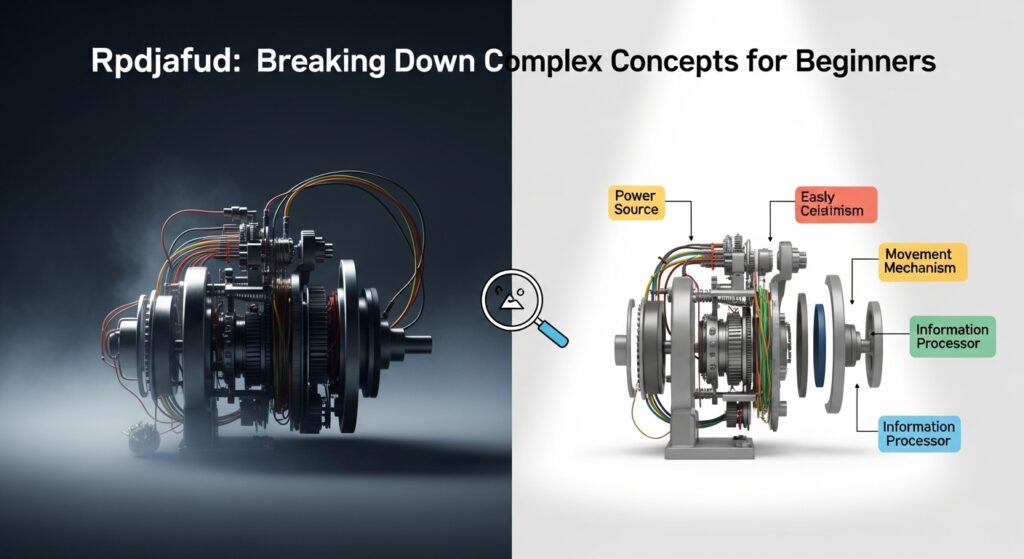
Have you ever stumbled upon a concept so intricate that it felt like deciphering an alien language? You’re not alone. Many beginners find themselves grappling with complicated ideas, leaving them feeling overwhelmed and frustrated. Whether it’s in science, technology, or any other field, understanding complex concepts can be daunting.
But what if there was a way to break these challenges down into manageable parts? Enter Rpdjafud—a unique approach designed to simplify the most convoluted topics for learners at any level. This blog post will guide you through the importance of simplifying complex concepts and provide valuable strategies for mastering even the trickiest subjects. Prepare yourself to transform confusion into clarity as we explore how to effectively navigate the learning landscape!
Common Challenges for Beginners
Beginners often face a steep learning curve when tackling complex concepts. One major challenge is the overwhelming amount of information available. It can be difficult to know where to start.
Another hurdle is jargon. Many fields are filled with technical terms that sound foreign and intimidating. This creates barriers to understanding, leaving beginners frustrated.
Moreover, many learners struggle with connecting theory to practice. The gap between abstract ideas and real-world application can feel insurmountable at times.
Self-doubt frequently creeps in. Beginners may question their abilities or fear making mistakes, which hampers progress and enthusiasm for learning.
These challenges can make the journey daunting but recognizing them is the first step toward overcoming obstacles in any learning process related to Rpdjafud.
The Importance of Simplifying Complex Concepts
Simplifying complex concepts is crucial for effective learning. When information is presented in an understandable way, it becomes accessible to everyone.
Many people abandon difficult subjects due to confusion and frustration. A simplified approach can spark curiosity instead. It invites beginners to engage with the material rather than shy away from it.
Using clear language reduces barriers that often accompany intricate ideas. Visual aids, analogies, and relatable examples transform overwhelming topics into digestible pieces.
This process fosters confidence in learners. As they grasp simpler versions of complicated notions, they build a foundation for deeper understanding later on.
Moreover, simplicity doesn’t mean losing depth or accuracy; it’s about clarity and relatability. Engaging with content at this level encourages exploration and promotes lasting knowledge retention. Everyone deserves the chance to comprehend challenging subjects without feeling lost or intimidated.
Strategies for Understanding and Learning
When tackling complex concepts, breaking them down into smaller parts can be incredibly helpful. Take the time to identify key components. Focus on one aspect at a time.
Visual aids are powerful tools too. Diagrams, charts, and infographics can make difficult ideas easier to digest. They provide clarity and context that text alone may lack.
Discussion with peers also enhances understanding. Engaging in conversations encourages different perspectives. It’s amazing how explaining an idea to someone else solidifies your own grasp of it.
Experimenting with varied learning methods is essential as well. Some people absorb information better through reading, while others benefit from hands-on experiences or multimedia resources.
Don’t shy away from asking questions—seek out clarification whenever necessary. Curiosity drives deeper comprehension and fosters a richer learning experience.
Case Studies: Applying Strategies to Real-Life Examples
Real-life examples can illuminate the path to mastering complex concepts. Consider a group of students grappling with Rpdjafud, an intricate topic that often feels overwhelming.
One student approached it through visual aids. By creating diagrams and flowcharts, she transformed abstract ideas into tangible forms. This method not only clarified her understanding but also made learning enjoyable.
Another learner focused on collaboration. He formed study groups where peers exchanged insights and simplified challenging areas together. The shared knowledge fostered confidence and deepened comprehension.
A third individual took the route of teaching others. By explaining Rpdjafud to classmates, he solidified his own grasp while identifying gaps in his knowledge. Teaching became a powerful tool for learning.
These varied approaches showcase how practical strategies can make complexity manageable and engaging.
Breaking Down Rpdjafud: A Step-by-Step Guide
To unravel Rpdjafud, start by identifying its core elements. Break it down into manageable parts. Each segment should represent a fundamental aspect of the overall concept.
Next, ask questions about each part. What does it mean? How does it connect with other ideas? This inquiry will deepen your understanding and facilitate retention.
Visual aids can be incredibly helpful here. Create diagrams or mind maps to visualize relationships between components of Rpdjafud. Seeing these connections in a graphical format often clarifies complex subjects.
Engage with others as well. Discussing Rpdjafud in study groups can provide new insights and perspectives that you may not have considered solo.
Practice applying what you’ve learned in different contexts. Real-world application solidifies knowledge and demonstrates how versatile the concept truly is.
Become a Master at Understanding Complex Concepts
Mastering complex concepts is a journey, not a race. Embrace curiosity and allow yourself to explore various angles.
Start with the basics. Build a solid foundation before diving deeper into intricate details. This approach makes it easier to grasp advanced ideas later on.
Practice active learning techniques such as summarizing information in your own words or teaching others what you’ve learned. Teaching reinforces your understanding and uncovers gaps in knowledge.
Utilize visual aids like diagrams or mind maps to map out relationships between concepts. Seeing connections visually can enhance retention and comprehension.
Don’t hesitate to ask questions, no matter how simple they seem. Engaging with peers or mentors often leads to new perspectives that spark insights.
Embrace mistakes as part of the learning process; they provide valuable lessons that deepen understanding over time. Each misstep is an opportunity for growth—stay persistent!
Conclusion
Understanding complex concepts can often feel like navigating a maze. With terms, theories, and jargon that seem meant for seasoned experts, beginners may find themselves lost or discouraged. However, breaking down these intricate ideas is not only possible but essential for anyone looking to expand their knowledge base.
Embracing strategies designed to simplify learning can transform your approach. By focusing on key principles and relating them to real-world examples, you create connections that enhance retention and comprehension. The journey through the complexities of topics like Rpdjafud becomes less daunting when tackled step-by-step.
As you apply these techniques in your own exploration of Rpdjafud and other challenging subjects, remember that mastery comes with patience and practice. Every small breakthrough contributes to a larger understanding. Continue seeking out resources, engaging with communities of learners, and applying what you’ve learned in practical settings.
Your path toward mastering complex concepts is unique—and each step forward helps demystify the intricacies involved. Embrace this opportunity as part of your educational journey; after all, every expert was once a beginner facing similar challenges.