The modern era is characterized by rapid advancement and ongoing transformation, where the boundary between formal education and practical skills becomes increasingly blurred each year. No longer is learning considered a finite undertaking completed in youth; instead, the digital age demands lifelong growth and adaptation. As professionals seek to stay relevant and personally fulfilled, embracing MSU Innovative Learning and similar progressive resources has become more critical than ever.
Lifelong learning enhances opportunities and resilience, blending technical skills with essential soft skills. In a rapidly changing job market, the ability to learn continuously is crucial for career growth and personal fulfillment. Access to high-quality educational resources facilitates this journey; however, intentional engagement is also necessary. Furthermore, lifelong learning benefits mental health by helping to prevent cognitive decline. Thus, learning agility is increasingly valued by employers in the talent acquisition and advancement process.
Importance of Continuous Learning
Today’s proficiency in a skill can become yesterday’s news in a matter of months. The half-life of technical skills—especially in areas such as analytics, artificial intelligence, and digital marketing continues to decrease. Employees are frequently expected to reinvent their expertise every year and a half, with developers and information technology professionals often learning entirely new frameworks within this brief window. However, the need for continuous learning isn’t limited to the tech sector. Healthcare, education, finance, and virtually every other field are experiencing a similar acceleration in the volume of information.
This pace of change highlights the necessity for a proactive approach. Rather than waiting for obsolescence, lifelong learners anticipate industry trends and shift focus before necessity becomes crisis. In doing so, they not only safeguard their own employability but also drive innovation within their organizations and the broader community.
 Digital Tools and Platforms
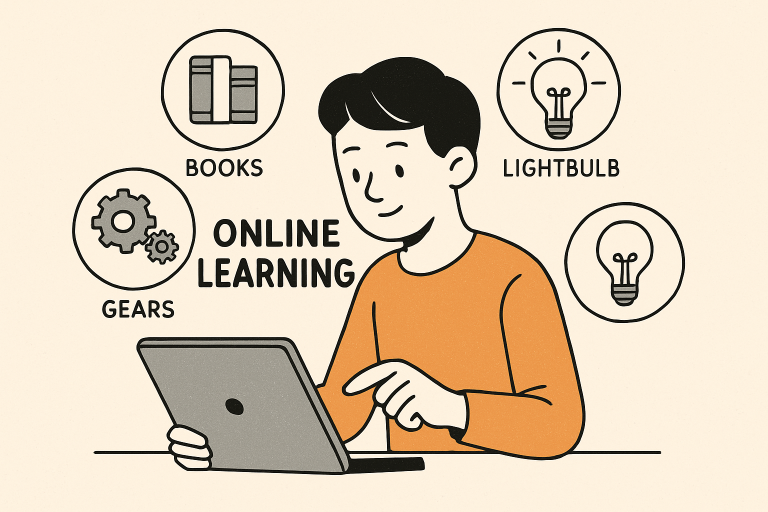
Technology has radically democratized education, making skill-building possible for anyone with an internet connection. Online learning platforms like YouTube, Khan Academy, and Coursera offer world-class lectures, tutorials, and interactive assignments at low or no cost, dissolving barriers of geography and expense. The influence of these resources is evident in the global adoption of microlearning, which breaks down knowledge into minor, easily understood segments that fit seamlessly into daily habits.
Microlearning not only accommodates demanding schedules but also leverages principles of cognitive science by promoting better retention through frequent, brief sessions. Individuals can develop highly specialized competencies or broaden their general knowledge while balancing personal and professional roles.
Additional digital tools, such as collaborative platforms and adaptive learning software, facilitate deeper discussions, mentor relationships, and real-time feedback, all of which strengthen learner engagement and motivation.
Balancing Learning with Professional Life
With the rise of the “infinite workday,” remote and hybrid workers face blurred boundaries between professional obligations and personal renewal. Fitting continuous learning into this landscape requires strategic planning. Setting explicit learning goals, creating time-bound routines, and breaking education into focused, twenty-minute intervals can make an ambitious learning agenda more manageable.
Organizations are increasingly providing stipends, tuition reimbursement, and access to e-learning libraries as part of employee development programs. Workers are encouraged to make the most of these offerings, and peer learning groups or accountability partners can drive motivation and persistence.
- Develop a learning calendar that blocks out dedicated weekly time.
- Embrace microlearning apps for language acquisition, business strategy refreshers, or technical upskilling on the go.
- Leverage employer platforms and virtual communities to crowdsource knowledge and share insights.
Role of Organizations in Promoting Lifelong Learning
Businesses and institutions occupy a vital position in the ecosystem of lifelong learning. Forward-thinking organizations are publicly committing to large-scale reskilling initiatives, pledging to train one million Americans in artificial intelligence and digital fluency over the next four years. Such programs build collective resilience, enhance competitiveness, and position organizations to anticipate and shape future demands.
Creating a culture of continuous learning starts with leadership. Management must value and model ongoing upskilling, integrate learning metrics into performance evaluations, and make resource access frictionless. Cross-functional projects, mentorship programs, and flexible learning hours are powerful incentives that help all employees, from entry-level to senior executives, grow in tandem with technological and market shifts.
Overcoming Challenges in Continuous Learning
Despite a wealth of digital tools, obstacles to consistent learning persist. The “Zone of No Development” describes a phenomenon where reliance on on-demand digital help limits independent problem-solving and critical thinking. To overcome this, individuals must balance technology-enabled study with opportunities for creativity, experimentation, and reflection.
- Practice self-directed exploration outside prescribed course material.
- Diversify experiences by engaging in workshops, volunteering, or hobbyist groups to supplement digital content.
- Adopt frameworks like metacognitive reflection to monitor and refine learning strategies actively.
Encouragingly, more adults are incorporating both analog and digital methods into their educational journeys, such as combining hands-on projects with virtual seminars, to create richer, more resilient learning experiences.
Future Trends in Lifelong Learning
Lifelong learning is evolving into a more inclusive, human-centric model. The concept of “Learning Societies for Digital Aging” highlights intergenerational knowledge sharing and empowers older adults to thrive in technology-driven environments. Centering humanistic values encourages educators and learners alike to pair digital proficiency with empathy, civic engagement, and adaptability.
- Future-ready educational models reward curiosity, cooperation, and problem-solving over rote memorization.
- Emerging technologies, such as AI-driven learning assistants, will personalize curricula by adapting content to learners’ goals and proficiencies, while also protecting intellectual independence.
- Broader access and increased customization will enable more people to—and remain—lifelong learners, regardless of stage or circumstance.
Embracing digital transformation, while maintaining a critical and creative outlook, is the essence of future-ready education. As new generations redefine the workplace and society, the power to learn, adapt, and contribute will remain the most significant asset anyone can cultivate.
Conclusion
In an era marked by constant change, lifelong learning has become a cornerstone of personal fulfillment and professional resilience. As digital tools and microlearning models continue to expand access to education, individuals must take intentional steps to integrate learning into their daily lives while maintaining balance with work and personal responsibilities. At the same time, organizations play a critical role in fostering cultures that encourage continuous growth, adaptability, and innovation.
Overcoming the challenges of digital learning requires thoughtful engagement, self-direction, and a commitment to intellectual independence. By embracing human-centered and adaptable learning models, learners at every stage can remain relevant, empowered, and prepared for the future. Ultimately, the ability to continuously learn, evolve, and apply knowledge meaningfully will remain one of the most valuable assets in an increasingly complex and dynamic world.